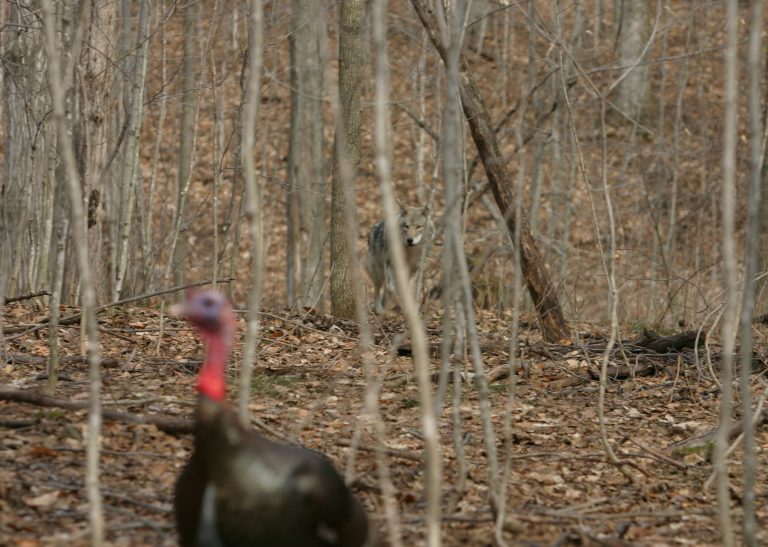
This Turkey Tuesday is about being predictable, and what emerging research shows about the consequences of predictability in the wild turkey world. What isn’t predictable is the plumage on this hen photographed by Darcy Daniels – what an incredibly beautiful and unique hen! Anyway, back to being predictable. Ongoing research is showing that individual toms show variation in their behaviors, with some being riskier in how they behave than others. Well, emerging research on hens is also showing that there’s considerable variation across individuals regarding how predictably they behave. Hens that exhibit riskier behaviors, such as spending time in areas frequented by predators such as coyotes, appear to also be more predictable. Interestingly, hens that are more predictable in their use of areas frequented by predators also appear to have lower survival – but hens that are predictably using areas closer to roads frequented by hunters during spring also have higher rates of nest success (note the dense cluster of points at and below zero in the 2nd image). So how could hanging out near roads translate to higher nest success? We’ve found on many study sites that predators like coyotes often avoid roads used by hunters, which makes sense as hunters represent a serious form of risk to coyotes! But hunters in the spring don’t really represent risk to hens, as hens are not typically pursued by hunters during spring. We found something similar years ago with gray foxes, as they avoided having to deal with coyotes by hanging out close to areas frequented by humans. These findings support the human shield hypothesis, in that animals that spend more time near areas used by humans may have higher fitness. The take home is ongoing research continues to show that wild turkeys exhibit behaviors that vary considerably across individuals, particularly regarding the risks they’re willing to take.